What is the value of contributing to a cultural world when the world as a whole is falling apart? This question is central to our performance adaptation of Thomas Bernhard’s Woodcutters by one actor for a cafe audience. The book, a blistering indictment of the complacency of the postwar Austrian cultural elite, is an unbroken 200-page monologue, where an aging writer takes stock of his aesthetic education, decades in retrospect. The reckoning the novel undertakes is specifically about Austrian artists grappling intensively with truth and accountability, personal and national, in the evolving aftermath of two world wars. It is also about the universal, in that it rebukes an erstwhile avant-garde for having chosen the comforts of convention and material well-being over the radical potential of art to tell difficult truths in daring ways.
As American artists in 2026, we recognize, powerfully and from experience, the novel’s dramatization of two opposing conceptions of the work of art: in the worst case, art may be an instrument of social domination; in the best, it is a vital medium for the production of shared, and truthful, worlds. Our adaptation of the novel for performance is designed, above all, to preserve the novel’s singular speaking voice, that of the artist who refuses, who sets himself in opposition to a corrupt and brutalizing world. Our production, therfore will feature a single actor speaking an abridged version of Bernhard’s text in David McClintock’s English translation.
Preserving the narrative rant is crucial to our understanding of the source material: Bernhard explicitly did not call this text a “novel”; that genre was tacked onto the English translation by its publisher. Bernhard categorized this book as an Erregung. A provocation, an incitement, catalyst to a commotion. By situating the performance in the social space of a café the audience becomes a key participant in the event. At times they are implicated in the monologue as the attendees of the purported artistic dinner. At others they stand in as the recipient of the narrator’s confessions.
Project Description
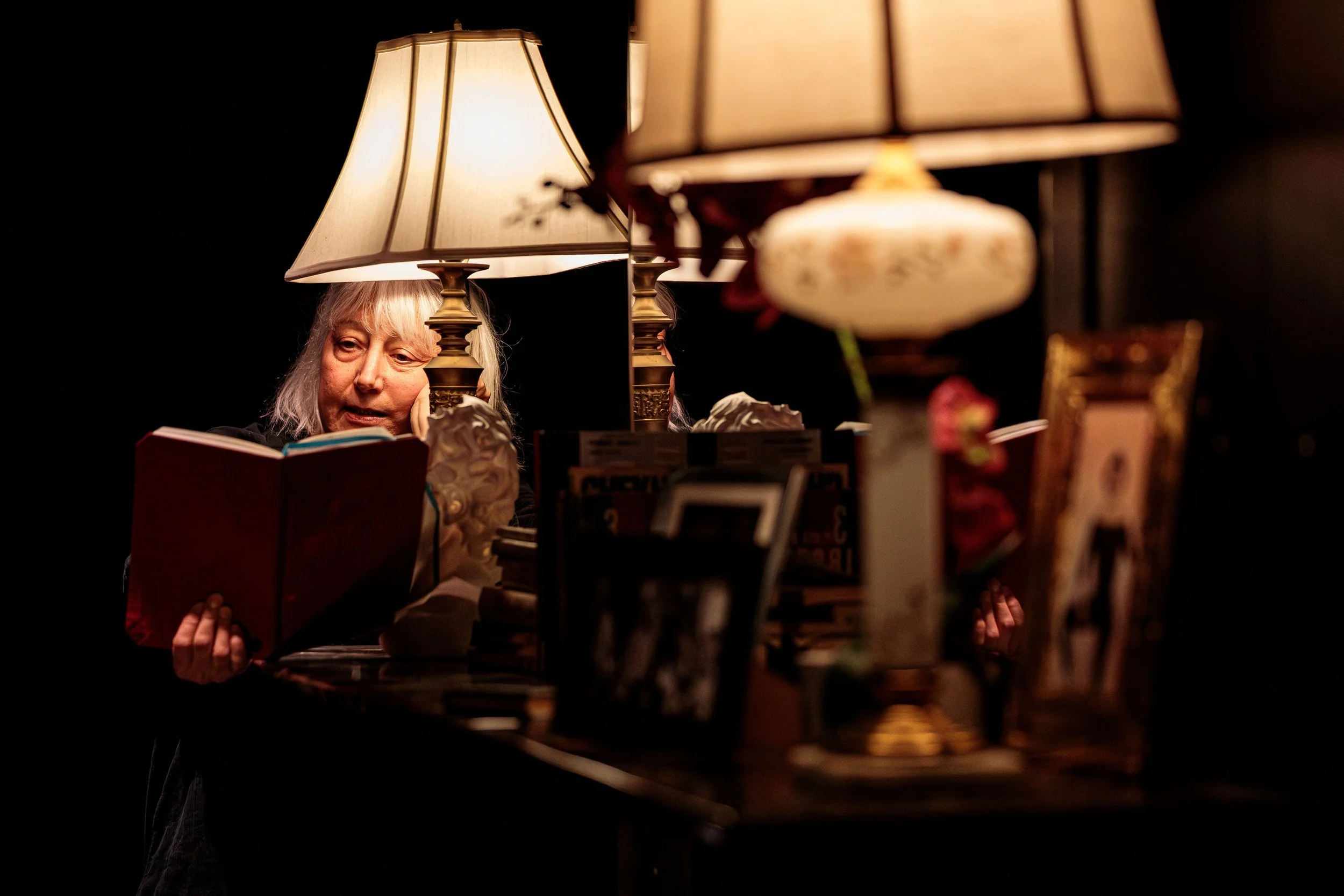
Photo by Benjamin Rose